One prompt, four Seedance models: 2.5, Lite, 1.5 and 2.0 in 4K
Four Seedance models live in the Actoria model selector, and the question I get most is simply “which one?”. So I ran one deliberately boring prompt through all four, stitched the results into a single 20-second film and wrote down everything the numbers and the frames showed. Here it is, typos included.
The setup
One project, vertical 9:16, cinematic style, the same settings on every scene: static camera, moderate motion, five seconds, sound on. The prompt was a single line with the model's name appended so the banner would tell me which clip I was looking at: “John comes to the bar and shows a banner — Seedance 2.5” (and Lite, 1.5, 2.0 respectively; the character's name is shortened here for publication). No actor asset, no location from the library — pure prompt, to see what each model does on its own.
| Model | Resolution | Mode | Tokens (5 s) | Click → ready |
|---|---|---|---|---|
| Seedance 2.5 | 1080p | text-to-video, audio | 150 | 3 min 50 s |
| Seedance Lite | 720p | text-to-video, audio | 40 | 1 min 50 s |
| Seedance 1.5 Pro | 1080p | image-to-video, audio | 100 (+5 for the first frame) | 2 min 00 s (+40 s frame) |
| Seedance 2.0 | 4K | text-to-video, audio | 300 | 6 min 07 s |
“Click → ready” is wall time in Actoria including the queue, taken from the job log, not a benchmark of the models' raw speed. Seedance 1.5 Pro is an image-to-video model, so it needed a first frame first: one Seedream still for 5 tokens, then the video.
What came back
Seedance 2.5 (1080p)
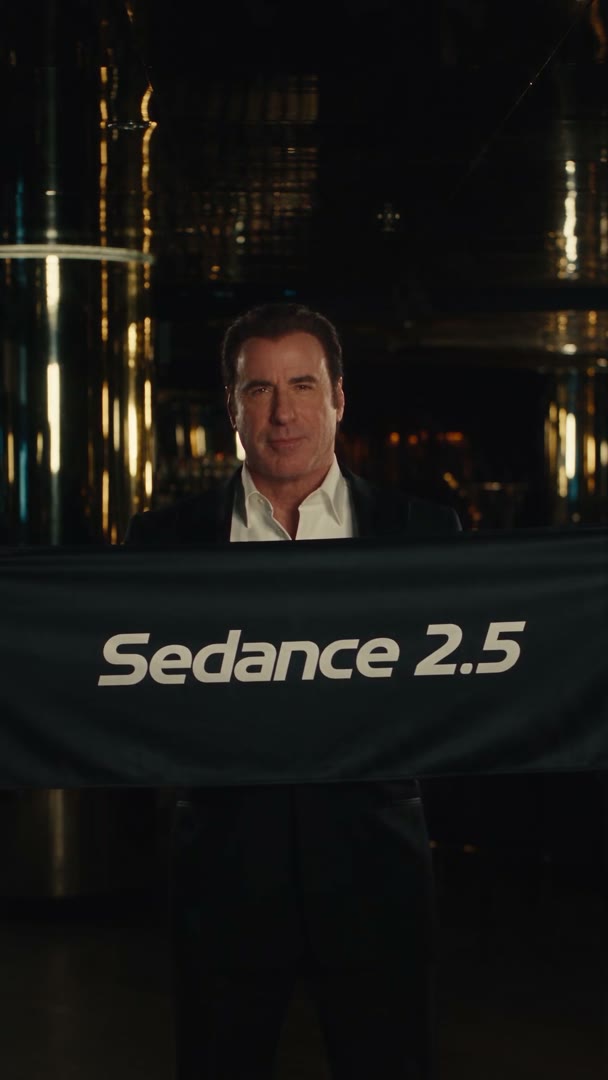
The house style: low-key lighting, a man in a dark suit walking out of the shadows, the banner unfurled with a natural two-hand gesture. The text is crisp and exactly what I typed. Motion is restrained and believable. It is the model I would hand to someone who wants “cinematic” without adding the word to the prompt. Audio was present but quiet — bar ambience rather than a statement.
Seedance Lite (720p)
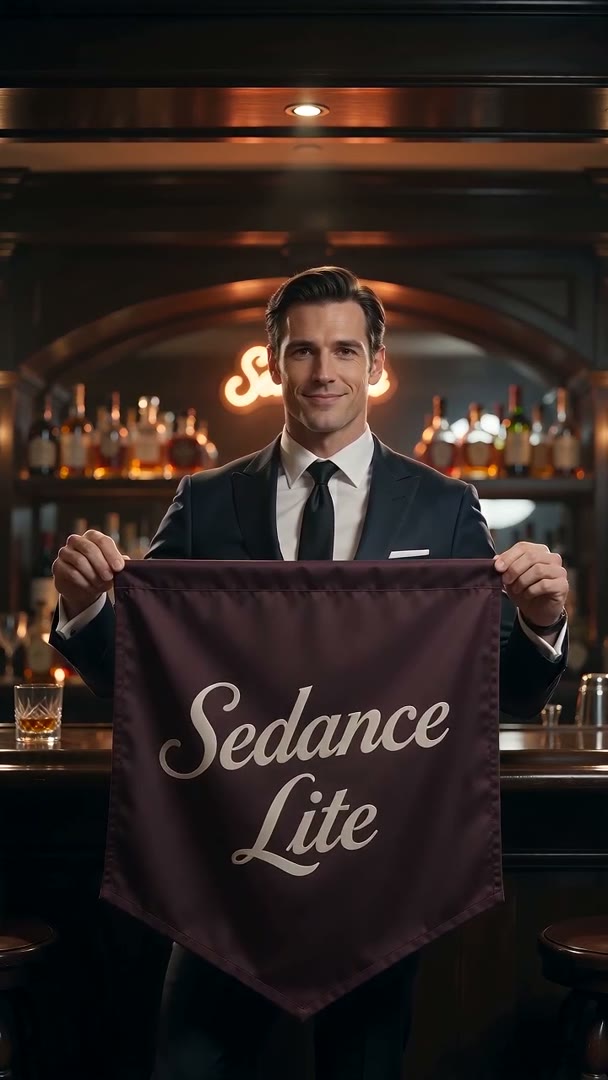
The surprise of the test. Lite produced the most polished-looking frame of the four: a warm, fully lit back bar, a man in a suit and tie, a burgundy pennant with clean script lettering — and, unprompted, a neon sign in the background that also spells the model's name. At 40 tokens it cost roughly a quarter of 2.5 and came back in under two minutes. 720p is visible if you look for it, and the motion is simpler, but for drafts, social posts and anything watched on a phone it punches far above its price.
Seedance 1.5 Pro (1080p)
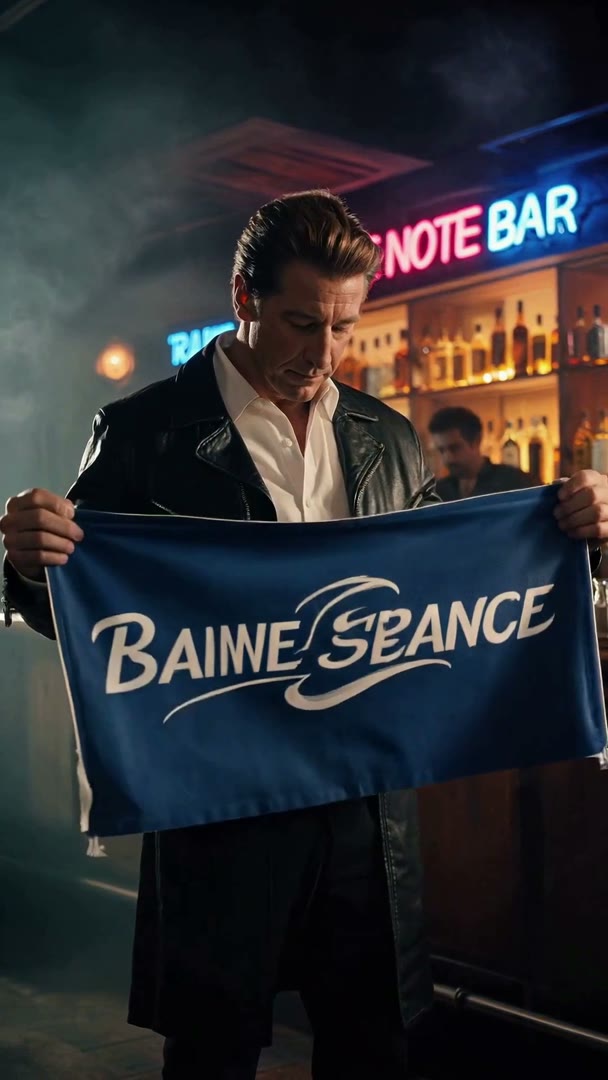
1.5 Pro works differently: you give it a frame and it animates it. My Seedream frame put two men at a neon-lit “Blue Note Bar”; the video kept one, in a leather jacket, smoke in the air — atmospherically the best bar of the four. Text rendering is where it falls down: the banner reads like an anagram. That is consistent with what we see elsewhere — 1.5 is the model to pick when you need to control the exact start (and optionally end) frame, not when you need legible signage.
Seedance 2.0 (4K)
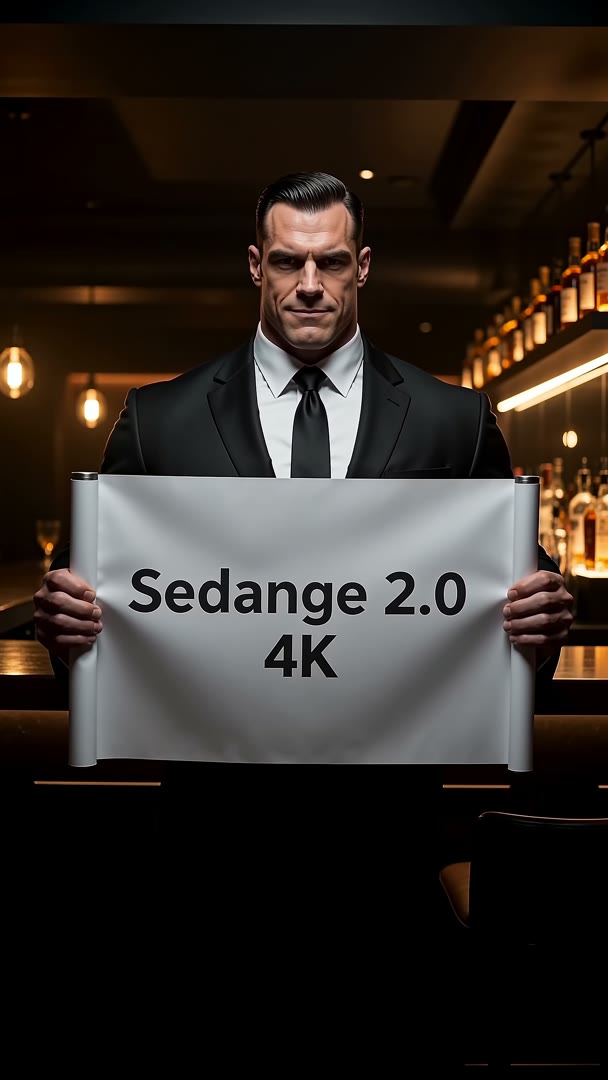
Four times the pixels and it shows: fabric, skin and the bar's bottle wall have detail none of the others has, and the paper banner unrolls with convincing physics. The text is one letter off (“Sedange”). It is also the slowest — six minutes from click to ready — and at 300 tokens costs twice 2.5 and seven and a half times Lite. That is the price of a hero shot, not of a draft.
Text on screen: the scoreboard
| Model | Asked for | Got | Verdict |
|---|---|---|---|
| 2.5 | Sedance 2.5 | Sedance 2.5 | exact |
| Lite | Sedance Lite | Sedance Lite (+ neon sign) | exact |
| 1.5 Pro | Sedance 1.5 1080p | garbled | don't rely on it |
| 2.0 | Sedance 2.0 4K | Sedange 2.0 4K | one letter off |
Practical rule: if a shot needs a readable sign, logo or label, use 2.5 or Lite and keep the text short. Don't ask 1.5 for lettering — give it a frame that already contains the sign instead.
Four models, four different Johns
Look at the four men again: a different face, build and wardrobe in every clip. That isn't a flaw in any one model — it's what happens when a character exists only as a word in the prompt. Each model samples its own “John”. This is exactly the problem Actoria's actors solve: create the character once and every scene, on every model, gets the same person. I skipped the actor on purpose to see the raw models; for a real film you wouldn't. More on why in why AI characters drift.
Sound
All four scenes came back with an audio track — the prompt didn't mention sound, so each model invented bar ambience on its own. Lite and 2.0 were noticeably louder than 2.5 and 1.5. If a scene needs a specific soundscape, the sound layer on top is more predictable than hoping the model guesses right.
Which one should you pick?
The whole experiment — four videos plus one frame — cost 595 tokens and about 45 minutes including my own clicking around. Current per-second rates are on the Seedance page; how they compare to other platforms is in the Seedance pricing study.
Draft on Lite, ship on 2.5, spend 4K only where someone will actually see the pixels.
Frequently asked questions
Why is the stitched film only 720p if two scenes were 1080p and one was 4K?
Finish normalises all scenes to a common size for the combined file. The per-scene originals in the Repository keep their native resolution — the stills in this article were taken from them.
Was the same prompt really used for all four?
Yes, word for word, apart from the model name appended at the end. Settings were identical too: static camera, moderate motion, five seconds, audio on, 9:16.
Why didn't you use an actor?
To see what the raw models do with a character described only in text. For an actual film you'd create the actor first so every model gives you the same person — that's the whole point of Actoria.